 admin
Every time I see an old black and white movie that is animated or Snow White the first Disney movie animated, I’m amazed. The work and ability to come up with the projection that displays moving pictures during the 1900s is fascinating, how each scene was drawn and then put together. However, the cinemas that had shown these movies are no longer present today, a modern twist has been made to make the viewings smaller or like some people to just watch in their own houses, on their couches, most likely with their devices. The cinema industry has changed and overcome so much over the years but now these older pieces of art can de displayed amongst its comrades in museums.
Shuzo Azuchi Gulliver is known as a multimedia artist who had been apart of the cinema. “Cinematic Illumination” was first installed in Tokyo in 1969 where a disco ball lights up the screen with numerous points of light, showing each image as the projector slides through them with music in the background. Like most people today, I forget about the progress that these movies had started. Shuzo took a simple silhouette of a man walking and turned it into art through the images he provided in the projector. Today, his piece of cinematic artistry is being shown at MoMA on a loop for the next generations to see and understand how the cinema used to be. Although most probably take this piece for granted, for me it’s a real amazement to see that this is a part of the museum. Photography, paintings, drawings, and sculptures have been known to be art even acting but never the actual movie, from the littlest detail of movement to the big architecture buildings provided for a single scene. With this piece on display, I feel like it brings back some of the art that is forgotten with the idea that the littlest pieces of design is art too.
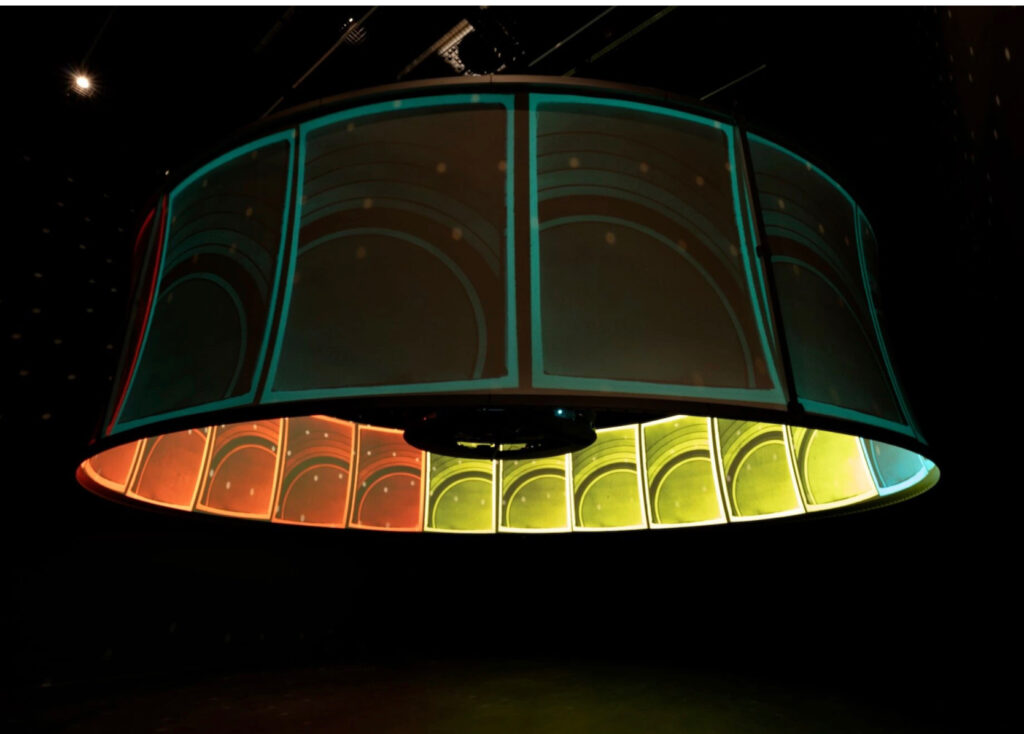
Shuzo gives the audience a view that allows them to make their own experience watching his piece, the freedom to interrupt and/or create a narrative based on what is being shown. He was able to create known pieces such as this, with little ability and cheap materials. Even though at this time if given materials that seem simple do create a nice aesthetic that can be appreciated for many years afterward. It’s quite interesting to leaner about the materials considering when buying any type of art material it is never cheap fo an inspiring artist to one that has tons of experience behind them. Unlike today it seemed based on the materials being cheap and not a lot of information given of them, that the material used to create these cinematic pieces did not matter as much as in today’s day and age.
Shuzo was not the only artist that Jason Farago had written about in correlation to cinematic illusions, Motoharu Jonochi and Keiichi Tanaami. These artist have been known to expand upon what Shuzo had started a blend of art where their culture is countered by the ideas of western culture, news, items that interesting to them due to their unfamiliarity, basically newness. They used their cinematic abilities to create new art types which I find enticing. To challenge a whole idea with a simple image just shows how strong art can be, how a simple image draws a stand, and can create more than anyone can imagine. Jason Farago, who had wrote this art review on countercultural dreamland as he titled it retells how these three artists especially Shuzo had grown up and countered their culture through their cinematic pieces. With the current pandemic of COVID occurring at this moment it can easily be seen how the cinematic theaters are struggling to keep afloat. This pandemic creates a similar situation to how the screens had changed to each new generation finding something else to watch or where to watch such as on a phone, a small screen compared to what they used to be. It’s such an interesting concept how each generation takes it completely for granted until it’s lost, but then a solution can be made but makes the item lost further. However, these artists were seen as tiny revolutionists since they had created revolutionary pieces as teenagers to question an idea in the only way they knew how art. Art allowed them to express what words could not, what every artist from this semester has seemed to say, the image, the piece of art express further what their words could not, the emotion, the embodiment of time. It’s almost as if art has not changed conceptually but when looking at Shuzo’s pieces from 1969 to the cinematic creations today all one can see is change. However is people say in science matter is matter is matter, art is art is art, no matter how it changes one can not take the value, the emotion, the expression away when the images change, the base the intent will always be there whether it’s animation or a traditional piece of art.